
When do I need to show the RI%, RDA, or NRV?
Short Answer:
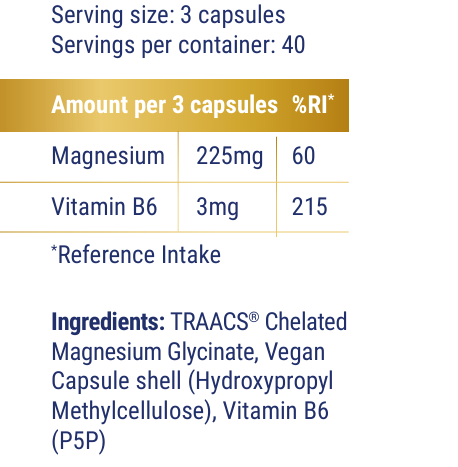
Whenever you include ingredients with a listed Reference Intake, which is most vitamins and minerals, you need to display their RI%. Best practice is to label the column RI%, although if you’ve already called it NRV% don’t panic, both are acceptable. The .Gov guide on this subject can be consulted here.
This is a complex area with a lot of “if this, then that” rules, so we strongly recommend speaking to us rather than getting your answers online.
What do I do if there are no ingredients with an RI%?
If none of your ingredients have a listed RI%, you don’t actually need to list anything. You will see a lot of brands who’s product has no ingredients with an RI% still include a column for RI%s, with nothing but blanks or asterisks indicating that there is no RI%, however this is not required. Best practice when no ingredients have an RI% at all is to just not mention them.
What if some ingredients have an RI%, but others dont?
In this scenario, most brands opt to put an asterisk in the column, leading down to a match note saying “No RI% established” or similar. Regulation does not infact require doing this, you are not required to show there is no RI%, so you could just leave a blank in the column rather than trying to explain.
Why RI% or NRV%, rather than RDA or DRV?
RDA and DRV%s can vary by age and sex, that’s why we don’t use them on supplement packaging.
RI% and NRV% are both considered acceptable in supplement packaging. RI% is generally best practice- the exact wording of the law used in the UK calls it both Reference Intake and Nutrient Reference Value.
Do I need to list an ingredient if it’s below 15%?
We are not aware of any law specifically banning a brand from declaring an RI% which is under 15%. You cannot use ingredients included below the 15% RI to justify health claims, but that does not mean you cannot list their RI% on your label. However, industry practice has been to avoid listing RI%s for ingredients with very low RI%s, typically below 15%. The HFMA suggests not listing values below 7-8%. VMS typically leaves values below 15% off the label, unless there is some logical reason to leave them on - for example in products where multiple doses in one day could add up to a more meaningful %, which the customer may benefit from knowing about.
Not sure you’ve understood?
This is a complex subject. We would always recommend speaking to us for expert advice around your exact product to ensure you get your label right.